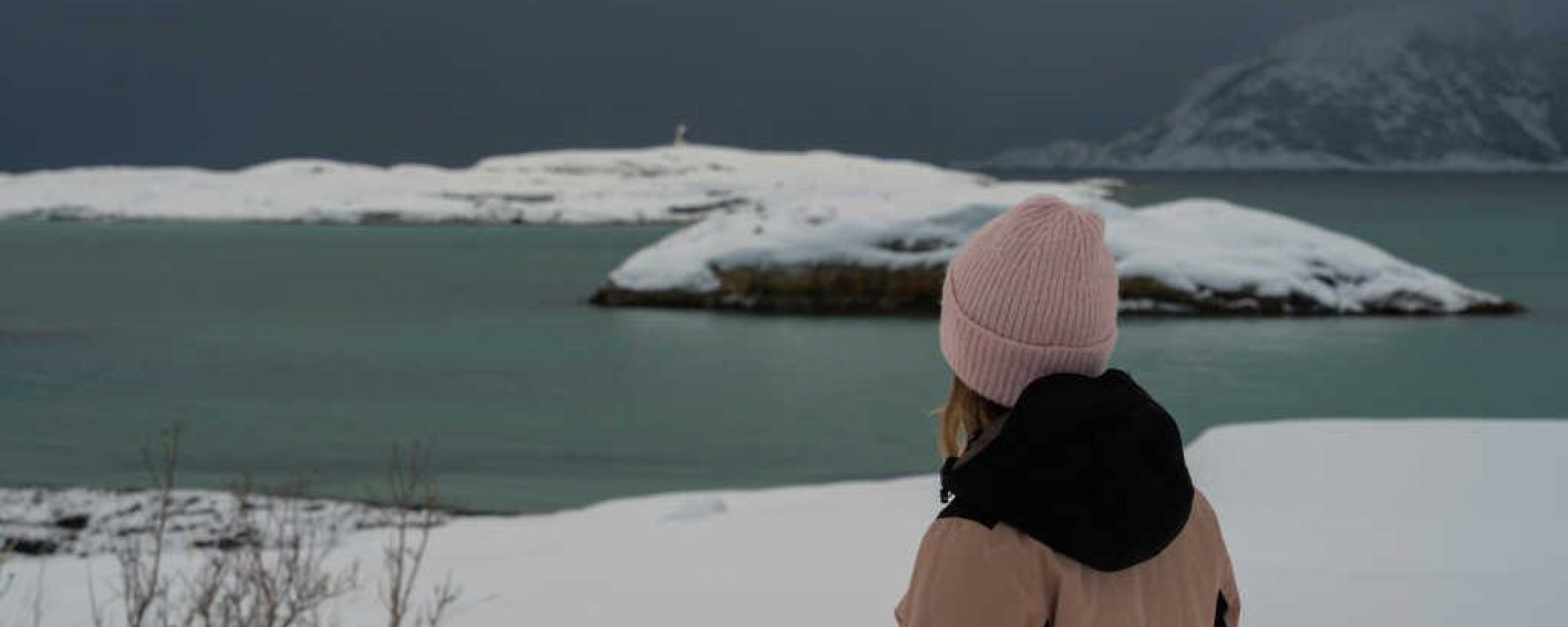
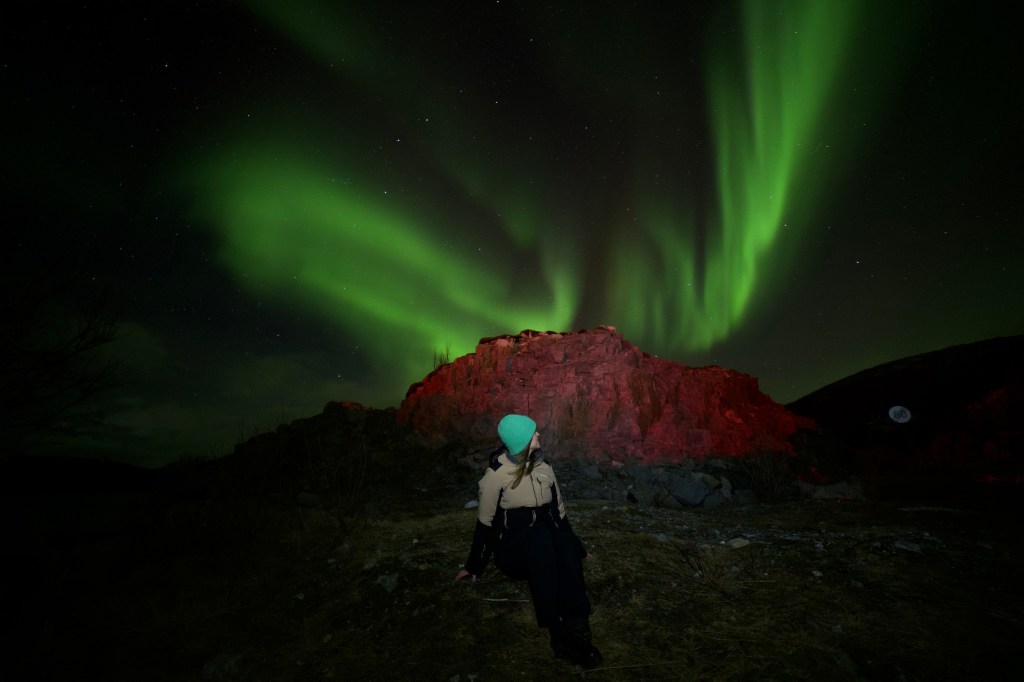
There’s something deeply humbling about standing under a sky that’s alive. I don’t mean with stars, I mean with ripples of green, pink or red light that seem to dance across the sky.
The Northern Lights (Aurora Borealis) are one of the most spectacular natural displays on Earth, and I was lucky enough to witness them most evenings during my time in the Arctic (Norway).
I remember the first time I saw them. It was during my first visit to Tromsø in November 2023. It was freezing cold, my fingers were numb and I was awkwardly fumbling with my phone, but none of that mattered. The sky was moving and it felt like magic. Little did I know a year later I would be living in the city, experiencing this phenomenon regularly.
Sometimes, we are lucky enough to witness this spectacle across Europe. If this is the case and you’re lucky enough to have a clear sky in your location, you might just get to feel that same awe. Here is some information about the Northern Lights, and some top tips on how to photograph them if you do see them.
What Are the Northern Lights?
The Northern Lights are caused by charged particles from the sun colliding with gases in the Earth’s atmosphere, creating flashes of light. These particles are funnelled towards the poles by Earth’s magnetic field, which is why auroras are most often seen in high-latitude regions like Norway, Iceland or Canada.
But, during periods of intense solar activity, the lights can travel much farther south. Countries like Scotland, Ireland, Germany, the Netherlands and even parts of France have the chance to catch a glimpse. This of course depends on cloud cover and light pollution.
How to See the Northern Lights
Here are my personal tips to give yourself the best chance to see the Northern Lights.
If you can, get away from city lights. Light pollution is the Northern Lights’ worst enemy. Try to head for dark, open areas. This could be a field, a hill or a coastal path.
The lights are called the Northern Lights for a reason. So, make sure to face north and keep your eyes on the horizon. They often appear low before rising and moving across the sky.
Probably the most important rule is to be patient! The Northern Lights don’t follow a schedule. Sometimes they flash brightly for a few minutes, other times they move quietly. Give yourself at least an hour under the stars.
Keep yourself updated by regularly checking aurora apps or websites. I like to use ‘My Aurora Forecast’ to check real-time activity and visibility predictions.
How to Photograph the Northern Lights on Your Phone
Don’t worry, you don’t need a fancy DSLR to capture the magic. But, if you are using your phone then you do need to tweak a few settings.
On most modern smartphones, night or pro mode allows longer exposures. Make sure to turn this on to let more light in.
If possible, set a long exposure (5–10 seconds is ideal). Also, keep the ISO between 800–1600 for a brighter image without too much grain.
Using a tripod helps a lot, or make sure to rest your phone on a stable surface. Even slight movement will blur the photo during long exposures. It makes such a difference, believe me!
One of the biggest mistakes people make is using their flash. Turn it off! You don’t need it, and it will ruin the shot.
If your phone allows it, set focus to infinity. If not, try tap on the furthest star you can see.
Please note that in Norway or Iceland, you can capture dramatic images with dancing colours overhead you using longer exposures. In Ireland or Germany, the aurora may not be visible to the naked eye at all. But, a camera with a long exposure setting can still reveal the green glow near the horizon.
Same Phenomenon, Different Experience
It’s also important to point out that while the Northern Lights are the same natural phenomenon everywhere, the experience of seeing them in polar regions like Norway or Iceland versus southern countries like Ireland or Germany is quite different.
In the polar regions (like Norway, Iceland or Finland) auroras can appear directly overhead or all around you, often with strong green, purple or even red colours. But in southern countries (like Ireland, Germany, the UK) the lights often appear as a faint glow in the sky, not overhead. The auroras might also be dimmer and less colourful, so that means they are often green or greyish to the naked eye.
But! On rare, powerful nights, the lights can be surprisingly vivid in southern countries, especially from dark, coastal or elevated areas.
It is really special witnessing the Northern Lights. So grab your warm coat, your phone, a flask of tea and head out. Whether you capture the perfect shot or just soak it in with your own eyes, the memory will last longer than the lights themselves.
Discover more from Anna Cullen
Subscribe to get the latest posts sent to your email.
 Anna Cullen