Cost: €€ (Expensive)
Safety: 5/5 for solo female travellers
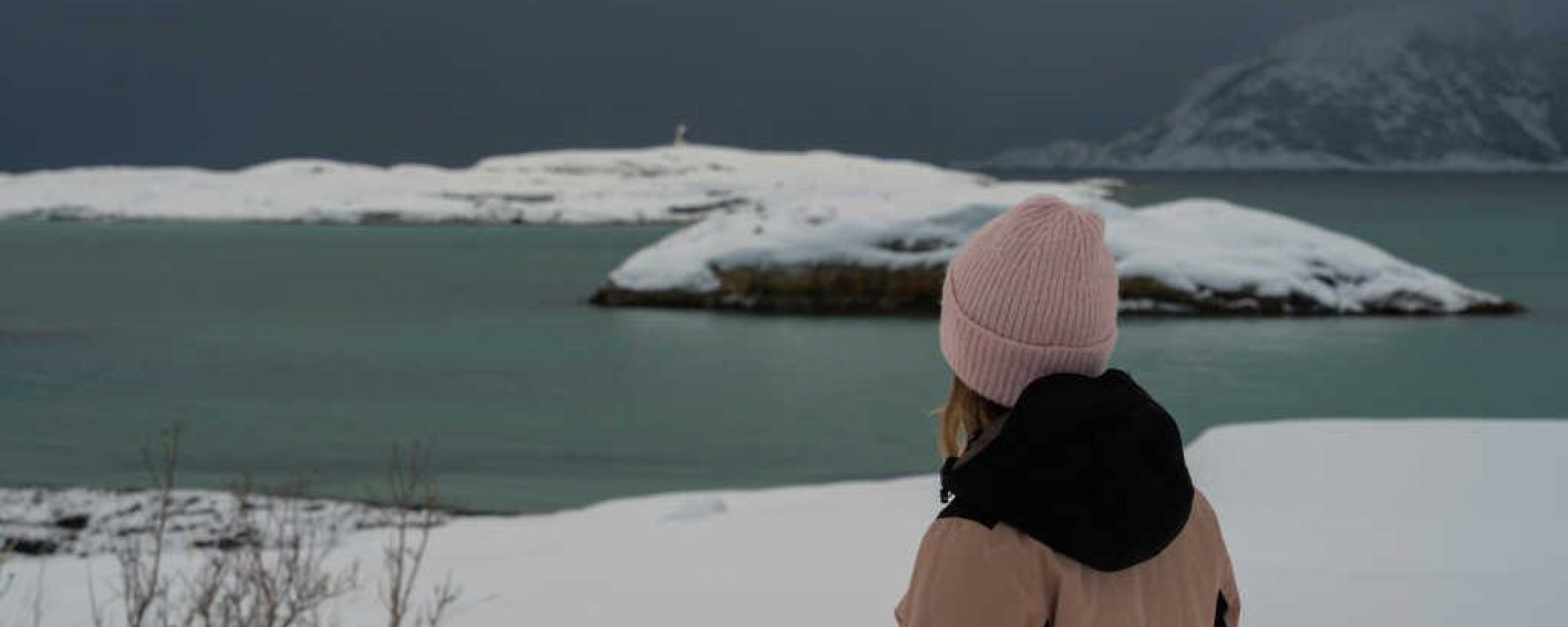
Polar bears, glaciers and freezing temperatures! Yes, I am talking about Svalbard.
Svalbard is a Norwegian archipelago that is situated north of mainland Europe in the Arctic Ocean. It is located about halfway between the northern coast of Norway and the North Pole.
While Svalbard is under Norwegian sovereignty, the Svalbard Treaty of 1920 gives citizens of the treaty’s signatory countries (like Russia, the U.S. and others) certain rights to live, work and conduct business there.
The largest island is Spitsbergen, which has a population of just under 3,000 people. In April, I decided to visit Longyearbyen, which is located in Isfjorden on the west coast of Spitsbergen. Longyearbyen is the world’s northernmost settlement and is the largest inhabited area of Svalbard.
Svalbard is one of the most fascinating places I have ever been. It has a unique history, amazing landscapes and a sense of peacefulness. On Svalbard, no roads connect the settlements. Instead, people travel by airplanes, on snowmobiles and on boats.
How to get there
The most common way to get to Svalbard is by plane. From Ireland, you can fly from Dublin Airport to Oslo via SAS, and then to Longyearbyen via Norwegian Airlines.
As I lived in Tromsø, I flew direct to Longyearbyen via Norwegian.
Language, Currency & Weather
Norwegian is the main language in Svalbard, however most people are also fluent in English. The currency is the Norwegian Krone (NOK).
The archipelago has an Arctic climate, but it has higher temperatures than other areas at the same latitude due to the impact of the Gulf Stream from the Atlantic Ocean. When I visited in April, temperatures were between -15 and -22 degrees Celsius.
For clothing, make sure to bring lots of layers, with woollen thermals, fleece, and windproof outerwear. Most tours provide gear like suits, boots, gloves and helmets, but you will need to dress extra warm if exploring the town yourself.
Public Transport
As I mentioned, no roads connect the settlements. Instead, people travel by snowmobile and on boats.
To get to and from the airport in Longyearbyen, there is an airport shuttle which corresponds with all arrivals and departures. The airport shuttle stops at every hotel and guesthouse. You need to pay on board the bus in NOK or by credit card. You can also get around by taxi.
Longyearbyen is a small town, so it is relatively easy to explore by foot. However, please note that on both sides of the settlement there are polar bear warning signs. This means you should not go past those signs without an experienced guide and a rifle (in case you meet a polar bear!).
Where To Stay
Accommodation in Longyearbyen is expensive, therefore it can be hard to find something reasonable yet comfortable.
I stayed at Svalbard Hotell | Polfareren and it was great – nice, comfortable and in a suitable location. I would also recommend the Radisson Blu Hotel and Mary-Ann’s Polarrigg.
Where To Go & What To Do
Longyearbyen might be small, but it’s full of Arctic charm and some genuinely unforgettable experiences. I spent about three and a half days there, but I felt I could have stayed another day as there is so much to do and see.
While in the town, it’s definitely worth visiting Svalbard Museum, which has great exhibits on polar exploration, mining history, wildlife (like polar bears and walruses) and the harsh Arctic environment. Svalbard Church is open 24/7 and has a cosy and friendly atmosphere. I also visited Galleri Svalbard which is small but it has a lovely art gallery with local and international Arctic-themed works.
For outdoor adventures, I would recommend booking a dog sledding trip. I travelled to Bolterdalen and it was incredibly cold (-17 degrees Celsius) but beautiful. The guides were excellent and the views were incredible. I also booked an electric snowmobile trip to the Adventdalen Valley during the sunset. I was in a group of four which was perfect, and the trip took around three hours in total.
For other snowmobile trips (remember to bring your driving license), I would recommend travelling to the east coast (about 10 hours as it is a 190km trip), to Barentsburg (also about 10 hours and it is about a 150km trip), or to Tempelfjord (about eight hours).
I also booked a fjord cruise to explore the abandoned Soviet mining town of Pyramiden and the majestic Nordenskiöld Glacier. This was absolutely incredible and was nothing like I ever experienced before. As we sailed through the ice, it truly felt like an authentic Arctic experience.
Just a few kilometres outside Longyearbyen is Coal Mine Number 3, and I decided to book a guided tour to learn more about what daily life was like for coal miners in the Arctic. The mine opened in 1971 and operated until 1996. It was the last manually operated coal mine in the area. This means no conveyor belts or automation; just people, picks, and carts. After it shut down in 1996, it was left mostly untouched, so the tools, equipment and even paperwork were left as they were. During the tour, I dressed in miners’ gear with a suit, helmet and headlamp. With the group, we walked deep into the mining tunnels, which get pretty tight and dark. I saw everything from old drilling tools to miners’ break rooms and really got an insight into the tough, cold, and claustrophobic conditions they worked in.
It is also possible to book a wildlife safari via boat or snowmobile, as well as a visit to an ice cave. In summer, you can book a kayaking trip around Adventfjorden.
What & Where To Eat
Longyearbyen is remote, but is has lots of choice for food and drink!
Kroa is a great spot that has local reindeer dishes and a cool interior. Svalbar is another great option if you are looking for good beer and pub food.
I would also recommend Polfareren Restaurant which is inside Svalbard Hotell | Polfareren (I stayed here). It has amazing Arctic dishes made from local produce.
If you are looking for fine dining, I’ve heard from the locals that Huset Restaurant has great reindeer tartare, and a massive wine cellar, which is one of the best in Scandinavia.
Karlsberger Pub is another good option if you are looking to unwind with some beer.
Speaking of beer, why not visit the northernmost brewery in the world, Svalbard Bryggeri. It’s possible to book a tour and tasting, and learn how they brew using glacier water.
Did you know?
It is illegal to die in Longyearbyen! This is mainly because of the permafrost in the ground that prevents traditional burial methods. Women are also not allowed give birth there because of the remote location. A few weeks before their due date, women must go to mainland Norway to have their babies.
Enjoy your time in Svalbard, it is a magical, unique place.
Discover more from Anna Cullen
Subscribe to get the latest posts sent to your email.
 Anna Cullen